



Bitumen Cold Adhesive
Product Images
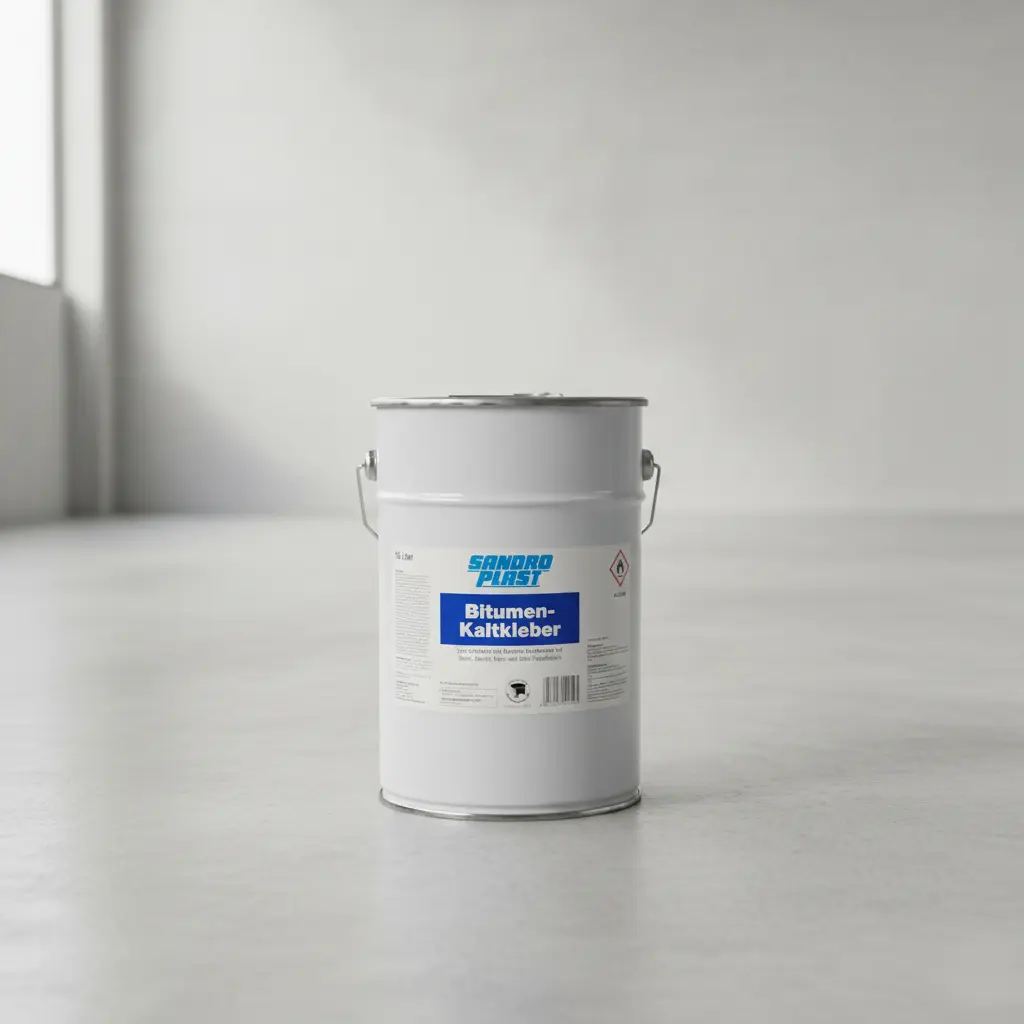
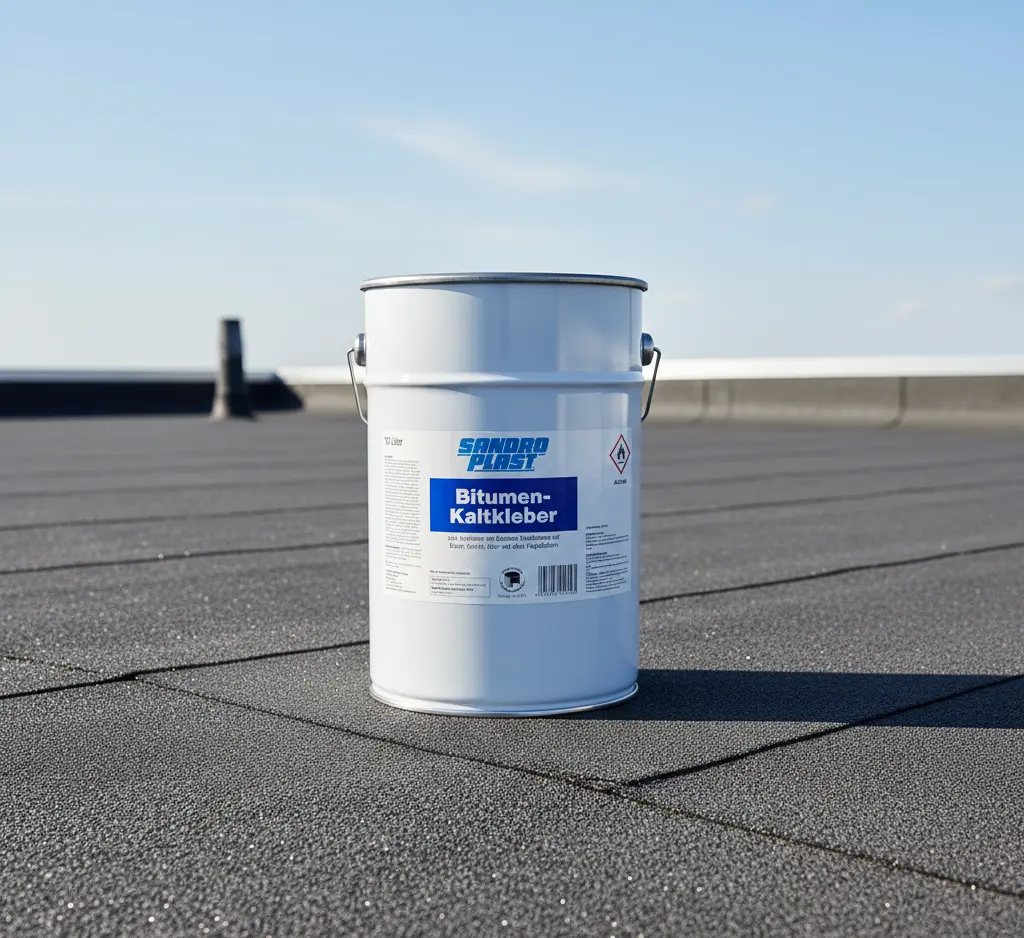
General Quick Information
- Solvent-based bitumen cold adhesive
- Excellent adhesion on bituminous and mineral substrates
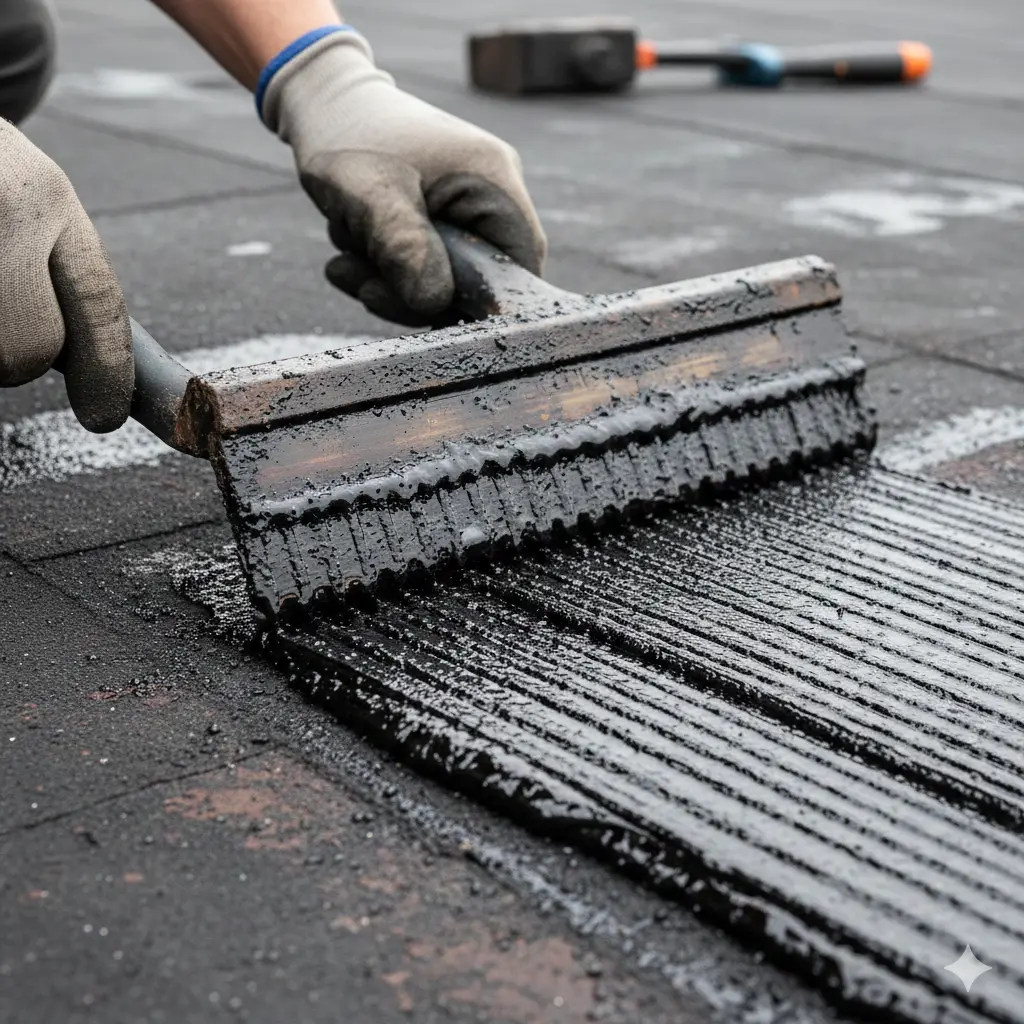
- Application methods: bitumen scrubber/brush or brush
- Universal application
- For roof slopes up to 10%
Product Type
Viscous, cold-applied, solvent-based adhesive compound based on bitumen.
Application Area
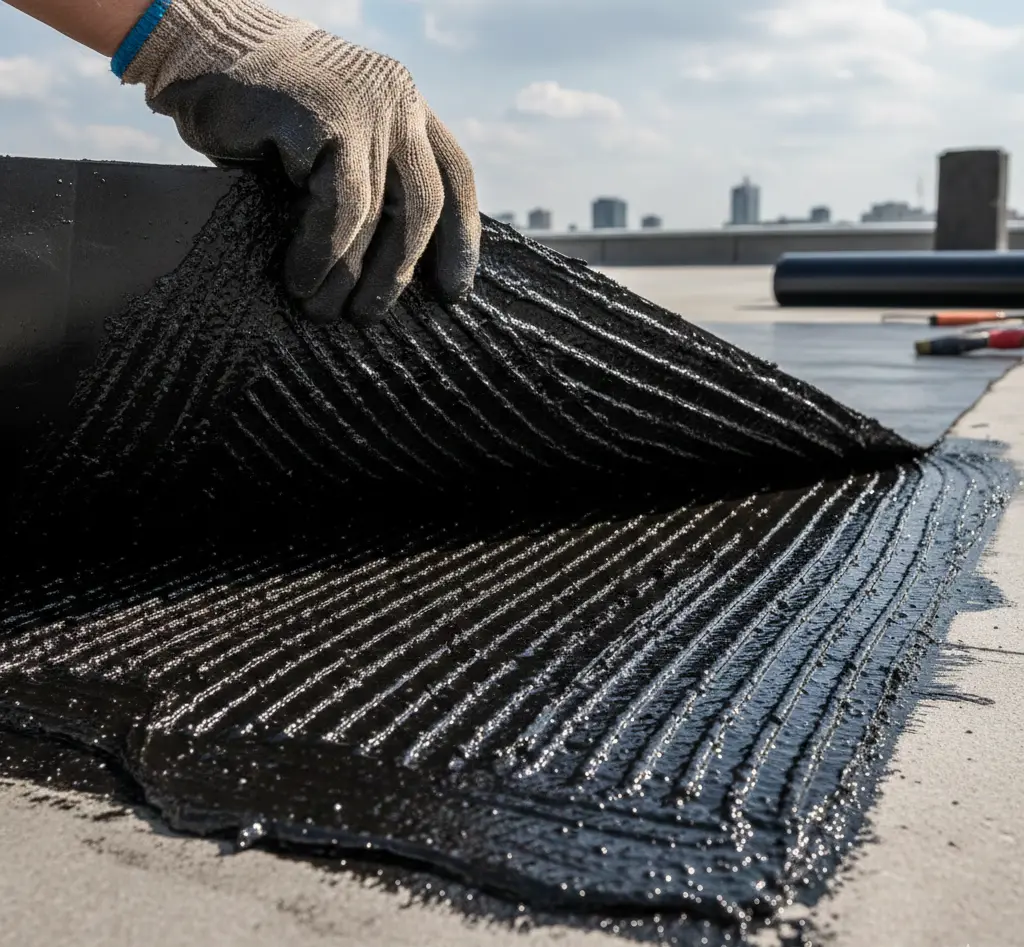
The sandroplast bitumen cold adhesive is excellently suited for strip or full-surface bonding of bitumen roofing and sealing membranes on various substrates such as concrete, screed, wood and old cardboard roofs. It is suitable for roof slopes with a maximum incline of up to 10%.
Especially for old and weathered roof coverings, a primer is essential to ensure optimal adhesion. The full bonding strength develops only after complete evaporation of the solvent, which enables precise and controlled processing.
Properties
The bitumen cold adhesive is a sealing compound based on bitumen that is applied cold. This solvent-based product is acid-resistant and contains stabilizing additives that prevent settling. The compound develops its full material properties only after complete drying. After curing, the cold adhesive is waterproof and extremely resistant. It is also both frost and UV resistant and remains permanently stable even under weather influences such as rain. The cold adhesive is not suitable for bonding styrofoam products.
The drying time of the sandroplast bitumen cold adhesive varies depending on weather and substrate conditions. Under favorable weather conditions, it can be significantly shortened. Thanks to its excellent adhesion on various surfaces, it ensures a reliable and permanent connection. The product can be applied using different application methods.
The sandroplast bitumen cold adhesive compound is characterized by its ability to slightly dissolve bitumen roofing and sealing membranes. This creates an excellent and complete connection.
The cold adhesive is not permanently resistant to solvents, fuels or oils. It is free from harmful substances such as tar, asbestos, phenol and PCB, making it a safe choice for various applications.
In summary, the sandroplast bitumen cold adhesive impresses with its versatility and outstanding material properties. It bonds roof coverings and other roofing materials. The adhesive also compensates for movements in the substrate. After complete drying, it is waterproof, frost and UV resistant.
Substrate
The substrate must be dry, clean, load-bearing and grease-free, and must not have any loose components or defective concrete and plaster areas. Cracks and holes must be repaired with suitable material.
For optimal adhesion on concrete, masonry and plaster, we recommend using the sandroplast primer. This ensures deep anchoring and thus guarantees excellent adhesion on the mentioned substrates. The primer should be completely dry before applying the cold adhesive.
For wooden roofs, ensure that the first layer of roofing membranes or roofing cardboard is nailed. This preparation ensures that the roofing membranes adhere optimally and fulfill their protective function reliably in the long term.
Processing
The adhesive should ideally have a temperature of 20 °C and the processing temperature should be between +5 °C and +35 °C. At low temperatures, it is recommended to store the bitumen cold adhesive in a heated room.
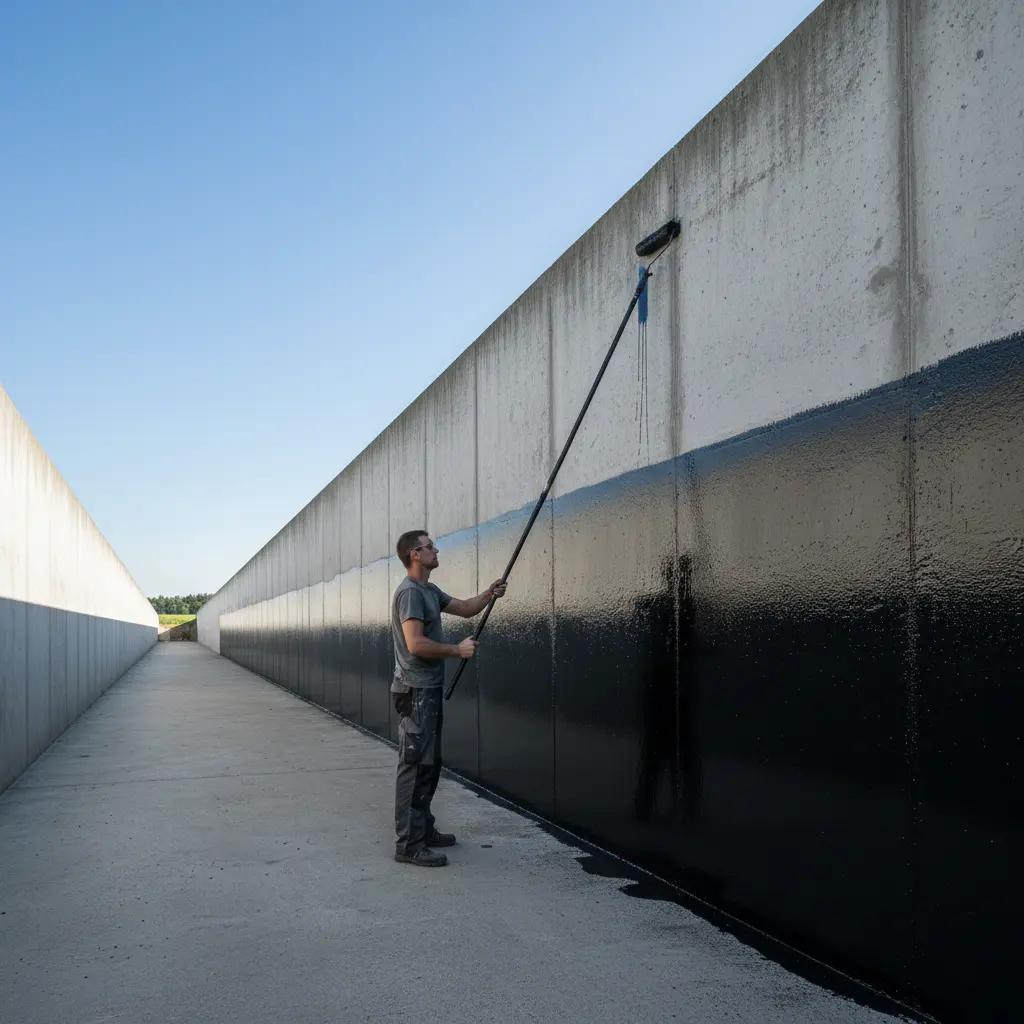
The material can be applied with a bitumen scrubber, a surface spatula or other suitable trowels. Let the bitumen cold adhesive compound ventilate for about 15 minutes before carefully rolling the roofing membranes into the adhesive layer. During drying, the coating must be protected from moisture, rain and condensation. The setting time can be several days depending on the outside temperature. Additional layers may only be applied after the adhesive film has completely dried.
Ensure that the membranes are rolled in bubble-free and pressed firmly. If necessary, they must be temporarily weighted until full bonding strength is achieved, which is obtained after complete evaporation of the solvent. For wooden roofs, the first layer of cardboard should be nailed and only the overlap joints bonded. On roofs without edge enclosure, you should work with small application amounts of cold adhesive compound (point or strip bonding) to avoid running off or dripping.
IMPORTANT: For outdoor use only! The processor is obliged to check the suitability and application possibilities for the intended purpose.
Frequently Asked Questions
Material Consumption
Consumption is approximately 1 kg/m² depending on the substrate.
Container Sizes
Additional delivery sizes upon request
Storage Conditions
The bitumen cold adhesive can be stored for up to 12 months in its original sealed container. The product should ideally be stored dry and protected from direct sunlight as well as from potential ignition sources. Furthermore, the product is not frost-sensitive.
Questions about this product?
Our experts are happy to advise you on application and product selection.
Request Consultation Now